Friday, January 21, 2011

Tokyo After Midnight: a B-movie Mystery


[Part 3 in the story of my mother LeAnn Bartok’s lost career in Japanese movies in 1959-1960 – and the search to find some trace of it over thirty years later.]

I came to Los Angeles in 1992 and wound up working at the non-profit American Cinematheque, then screening at the Directors Guild theater on Sunset Blvd.  At the time the Cinematheque was screening mainly classic Hollywood films.

Not long after a guy walked into my office carrying two shopping bags.  He was a solitary, intense-looking character:  bushy black eyebrows and the dead-calm, disinterested stare of a professional hitman.

He asked if I was interested in showing any overlooked Japanese movies.  The bags were filled with home-made VHS tapes from his enormous personal collection, films by then-unsung genre masters like Kinji Fukasaku, Hideo Gosha, Kihachi Okamoto, Tai Kato.
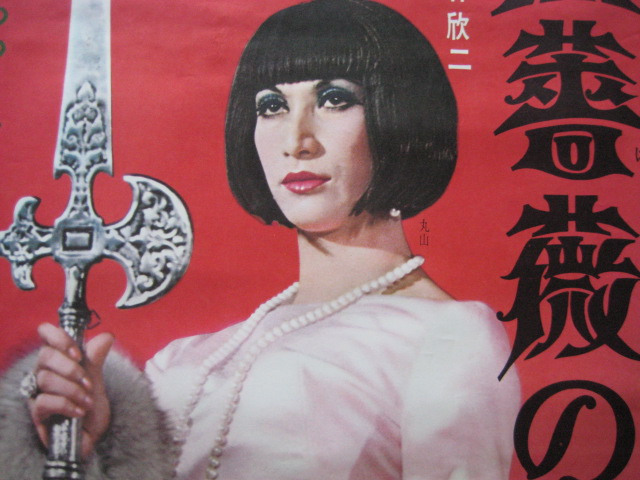
[Above:  image from Japanese 2-sheet poster for Kinji Fukasaku's subversive Black Rose Mansion (1969)] 

Chris D. remains one of the most fascinatings guys I’ve met out in L.A.  Punk rock singer and founder of The Flesheaters … indie director, writer, and actor as well as poet and lyricist (the recent anthology “A Minute To Pray, A Second To Die”) … He’s also, for the purposes of this story, a walking library on Japanese cinema from the 1950’s & 1960’s to today.  His book of essays and interviews “Outlaw Masters Of Japanese Film” is essential reading for anyone interested in this subject.


[Above:  Chris D. and our good friend Yoshiki Hayashi, who was enormously helpful in the hunt for LeAnn's films, in Tokyo in 2001]

Chris's love, and his knowledge, of these movies has a kind of incandescent, almost religious, fervor to it.  He’s a dark preacher thundering on about films with titles like Go Go Second Time Virgin, The Age Of Assassins and Graveyard Of Honor & Humanity.

Guided by Chris’s expertise – and partly inspired by my own unusual family connection to Japanese movies – the Cinematheque started screening dozens of unseen Japanese genre films in its annual Outlaw Masters of Modern Japanese Film series.

Our partner in crime was another man who’d prove instrumental in learning more about my mother LeAnn’s brief career in Japanese films:  Isao Tsujimoto, then Director of the Japan Foundation’s L.A. office.

A spry, extremely cultured man with a mischievous wit, Isao turned out to nurse a secret passion for the same kind of subversive Japanese genre films Chris and I loved.  He remembered camping out in movie theaters in Japan in the late 1960’s as a student to see the latest yakuza films.  “As students we felt a kind of kinship with the yakuza anti-heroes,” he recalled.  “They were outcasts and rebels like us.”  It was Isao in fact who came up with the “Outlaw Masters” moniker.


[Left to right:  Isao Tsujimoto of the Japan Foundation, Susan Gold -- and the man who'd play a key role in the hunt for LeAnn's lost movie] 

Isao used his considerable influence to strike new 35 mm. prints of previously unseen films like Koji Wakamatsu’s scandalous Go Go Second Time Virgin and Ecstasy Of The Angels.  (Wakamatsu remains persona non grata with the U.S. State Department, unable to travel to America, as we found out when we tried to bring him in for one of our series.)

From me, Isao and Chris both heard the story of my mother LeAnn’s time in Japan and the few tantalizing details I had about her film career.  We made some inquiries -- but Nikkatsu’s Kimi Wa Nerawareteiru from 1960 turned out to be beyond obscure. 

It was completely unknown.  No one we met had ever heard of or seen it.

During this time my mother LeAnn’s health grew progressively worse from asthma she’d developed in the late 1970’s and from the onset of adult diabetes.  She lived in Manhattan with my older sister Shari and younger brother Jayce, and we stayed in touch through almost daily phone calls.  Money was always a huge worry.

LeAnn and Shari practically begged me to help find a copy of one of her Japanese movies; it was a formative period in LeAnn's life that had obviously influenced and inspired her as a filmmaker and artist.


[Above:  LeAnn Bartok during performance art event at the Annual New York Avant- Garde Art Festival at the Passenger Ship Terminal in New York in the early 1980's]

Still, I had no success in finding a copy of Kimi Wa Nerawareteiru or any other movie she made in Japan in 1959-1960. 

It felt frustrating:  my job was to ferret out lost and overlooked movies, I was essentially a film detective – and here I couldn’t find any trace of LeAnn’s film career.  Not even a still photo.  What kind of a son was I?

I knew on some level that time was running short for her.  She’d been taking doses of steroids to control her asthma since the late 1970’s – as we later learned these can have serious side effects including a weakened heart and periods of deep depression.  The diabetes only made a bad situation worse.  But it’s hard to confront these things when it’s your own parent.

I loved my mother deeply, and struggled as a child growing up to understand and appreciate her work as an artist …

It was difficult and all right at the same time, to borrow a phrase from one of her favorite writers, the great New York poet Frank O’Hara.  I could feel utterly helpless at her titanic fits of temper.  Ashamed and useless at her weeks-long bouts of illness and labored breathing, frustrated that I couldn’t do anything to help.  So I’d retreat into the false safety of my own world of movies and vinyl records.

I know now that it’s almost impossible for someone on the outside to understand what it’s like to live with chronic illness on a daily basis.

Only slowly could I get some distance and really begin to see her as an artist.  As a kid growing up, it was just what she did.  There were paintings everywhere in our house, we leaned against them watching TV … there was a Bolex camera and editing bench in the basement.  My brothers and sister and I ran around the desert, laughing, helping her gather the fallen streamers from her mile-length drops.  We thought it was fun.


[Above:  poem by LeAnn Bartok circa 1976]

Growing up in suburban Pittsburgh in the 1970’s, I was sometimes even embarrassed by her strangeness, her refusal to fit in:  Why did she have to throw art out of airplanes?  Why did she drive around in a van wearing a black cowboy hat like a female trucker?

I was a kid, what did I know?  I knew she was different. 

Ironically there’s a famous saying in Japan, “The nail that sticks out gets hammered down.”  My mother was definitely the nail that sticks out.


(Next chapter:  Kinji Fukasaku, yakuza master)

[All photos, artwork and text by LeAnn Bartok:  Copyright, courtesy of Estate of LeAnn Bartok]

Sunday, January 16, 2011

Tokyo After Midnight: a B-movie Mystery

[Part 2 in the story of my mother LeAnn Bartok’s lost career in Japanese movies in 1959-1960 – and the search to find some trace of it over thirty years later.]

Living alone in Tokyo, barely able to pay the rent, my mother LeAnn felt disoriented, stranded.  She looked into working as a nurse but her lack of Japanese, and the low nurses’ pay, forced her to look for better-paying work.  She wound up teaching English to future Toyota executives, who treated her like a member of the family; during the brutal student riots in 1960 she remembered several of her pupils coming to class bruised and bloodied.  Despite high anti-American sentiment in Japan at the time -- students were protesting the country’s entry into a security treaty with the U.S. – she never personally saw any sign of prejudice. 


[Above:  modeling photo of LeAnn taken at Tokyo steakhouse in 1959; this was apparently used in a Toyota sales brochure]


To this day I look at movies shot in Japan in the late 1950’s and early 1960’s and try to imagine what it looked like then.  The Tokyo my mother would’ve known.  I’ve been there several times myself, but it’s changed so radically.  One night out walking with my friend Isao Tsujimoto he stopped and pointed at an enormous row of buildings:  “when I was young those were nothing but empty lots,” he said, trying to remember the city that was lost and would never return.

Years later, after LeAnn had trained herself to become a painter and avant-garde filmmaker, random memories of that long-past time in Tokyo would come floating by, like pages ripped from a diary and tossed in the stream …

A photographer noticed her on the street – she would’ve stood out, a young American woman in Tokyo – and hustled her to take a picture.  

Through him she met the man who was instrumental in getting her into the movies:  Osman “Johnny” Yusuf.

If you look him up on IMDB you’ll find more than half-a-dozen screen names including “Johnny Osman,” “Yusef Toruko” and more.  Fitting for a guy who worked as a part-time agent, actor and pimp.

 Details are fuzzy on Yusuf:  he was apparently born in Turkey, although he told my mother he was a “white Russian.”  It could be true:  his birthdate is listed as 1920, perhaps his family escaped from Russia to Turkey and he kept referring to himself by the mother country.  (My friend, the director Hubert Cornfield, was born in Istanbul but insisted his family was Greek, not Turkish, even though they’d left Greece many decades earlier.)

You can spot Yusuf briefly in any number of Japanese monster movies including Mothra, King Kong Vs. Godzilla, Battle In Outer Space and Son Of Godzilla, sometimes playing a submarine crewman or innocent bystander.  Many years later when LeAnn was watching one of the Godzilla films with my brother Jayce she suddenly exclaimed, “Look, there’s my agent – he’s the one with the ray-gun.”

Yusuf took an immediate shine to LeAnn – she later claimed he was “in love with her,” although whether this was romantic or just paternal/friendly I never learned – and introduced her to his contacts at the Japanese studios.


Yusuf was apparently a good man to know in Tokyo, if you were a man:  in addition to working as an actor and agent, he’d occasionally field late-night phone calls from executives who’d noticed some attractive Japanese starlet on screen.

If the actress was hungry enough – and pay in Japanese movies, then as now, was pretty weak – she’d agree to a date.  As in Hollywood, young girls were easy prey.


Maybe because she was American, maybe because he nursed a secret crush on her – but Yusuf apparently never tried to rope my mother into his sideline prostitution business.   She knew what he was up to, but she still liked the guy.  I like the guy too, in a strange way.  He sounds a bit like Ben Gazzara in Bogdanovich’s Saint Jack.

The Japanese film industry in the early 1960’s could almost rival Hollywood in sheer volume and variety.  The major studios – Toho, Toei, Nikkatsu, Daiei, Shochiku and smaller distributors – were churning out hundreds and hundreds of pictures a year.  Almost as important, they controlled vast chunks of Tokyo real estate where they shot their yakuza crime films, chanbara wandering gambler movies and more.  (Over a decade later, when the Japanese film industry more or less imploded in the mid-1970’s, several studios survived by becoming, essentially, real estate companies.)

It was a great time to be in the movies, in Japan in 1960.  She wound up working for Nikkatsu and Toho studios.

And there the details of her story ended, more or less.


There were other memories, here and there: 

Vague recollections of various acting jobs.  A lunch one day with Toshiro Mifune.  How she got a part in a movie injecting a man with a needle because she was a trained nurse.  How they bleached her hair so badly in another it began to fall out and they frantically rubbed fish oil into her scalp to save it.

But just bits and pieces.  No names of film titles or directors she worked with, no paper trail to follow (not surprising:  now as then, many Japanese film deals are done by handshake, with no formal contract.)

Except for one movie:  Kimi Wa Nerawareteiru, a Nikkatsu film from 1960 directed by Motomu Ida.

[Above:  original speed poster for Kimi Wa Nerawareteiru.]

For some reason LeAnn saved the first two pages of the script for Kimi Wa Nerawareteiru, translated into English with the film’s title at the top. 


Maybe she saved it because it was one of her bigger film parts:  she remembered playing the boss of a narcotics gang.  Carrying a pistol in her stockings.  Smacking the hell out of people.

One of the characters in it was named “Henry Yamanaka,” that much she remembered clearly.  I heard the name “Henry Yamanaka” growing up so often I thought he was a real person.

Not long after making Kimi Wa Nerawareteiru she got pregnant.  (The bad joke around my family growing up was that my sister had “Made in Japan” stamped on her feet.) 

LeAnn left Tokyo and returned to the states, where she would re-emerge a decade later as her own unique breed of cowboy-hat wearing, mile-length streamer throwing avant-garde filmmaker.


(Next chapter:  Trying to pick up the trail 30 years later.)

Wednesday, January 12, 2011

Tokyo After Midnight: a B-movie Mystery

Chapter 1:


This is a detective story, of sorts.  “The case of the lost movie” as my friend Chris Marker put it.


As with many detective stories there is something missing which must be found – the great whatsit as Mike Hammer’s Velda sneers in Kiss Me Deadly … there’s a strange and unexpected cast of characters including a Turkish actor and occasional pimp, a hardboiled director of Japanese yakuza films … and, of course, a femme fatale

Who in this case is my mother, LeAnn Bartok.

Her face haunts me in two silvery black and white images from half a world and half a lifetime away.  Japan.  1960.

In the first she clutches a pistol, with bottle-blonde hair and a string of pearls (probably from Mikimoto, Japan’s famous dealer in cultured pearls).  She’s the boss of an international drug syndicate.  She spits out trashy B-movie dialogue:  “You’ll get what all rats deserve” and “There isn’t anyone alive who’s pointed a gun at me and gotten away with it.”

She’s like a cocktail waitress from hell.  But she’s in charge.  She’s Mr. Big and everybody’s scared of her.

In the second she peers through a window at Jo Shishido, nicknamed “Joe The Ace” in Japan.  He of the huge, artificially-implanted cheekbones.  Star of Suzuki’s Youth Of The Beast and Branded To Kill.  This time Shishido holds the gun. 

But there’s something odd and unreal about the scene … She’s trapped in black-and-white while Shishido and everything else is in color. 


She’s also twice as large as the others – she peers curiously at them from behind a window, like a goddess in an Indian temple, interested in the affairs of humans but always remote.

These images seem like something from a dream, but they are in fact real.  At least as real as Nikkatsu Studios could make them.

This is the story of how my mother LeAnn – a young nurse from Ohio turned conceptual artist, painter and avant-garde filmmaker – came to work in Japanese B-movies at the end of the 1950’s.  It’s also the story of the search for some trace of her long-lost career in Japanese movies over thirty years later.

Growing up in the suburbs of Pittsburgh in the early 1970’s I often heard my mother LeAnn talk about her time living in Japan.  In fact her professional bio from 1974 begins:  “Some background:  Born August 1, 1937.  Traveled to Japan, 1959.  Lived one year, Tokyo.  Active in filmmaking major studios.”  But that’s about all we knew.
LeAnn was already a filmmaker herself at that point, making wild, poetic, free-form experimental 16 mm. movies that documented her pioneering Skyworks projects.  Huge scale, environmental artwork that involved dropping multiple streamers of heavy colored paper from airplanes, culminating in her mindblowing mile-length drops:  The Black Mile, The Red Mile and others.


[Above:  photo of Skyworks - The Red Mile taken by skydiver']


The 1970’s were a crazy time:  Christo and Jeanne-Claude were doing the Running Fence in Sonoma … Otto Piene was making helium-filled inflatable sculptures … LeAnn was throwing mile-length streamers out of planes and filming them with cameras strapped to skydivers plummeting to earth with the artworks. 

The sky was literally not the limit.

She wound up being denounced on the floor of the U.S. Congress by Sen. William Proxmire who gave her his infamous “Golden Fleece” Award for wasting government money, for a small National Endowment of the Arts grant she received to fund one of her projects.

Then as now, politicians weren’t supporters of the arts – and especially not experimental, environmental, sky-high art.  From a woman.


[Above:  "Village Voice" article from Sept. 1976 on LeAnn's Skyworks drops.]


[LeAnn would decorate letters and even utility bills with her Skyworks Red Mile line]

LeAnn was born in Martin’s Ferry, Ohio, a hardscrabble little town that straddles the hills on both sides of the Ohio River.   I made a pilgrimage there a few years back to see where she grew up; she probably would’ve recognized it as much as the same.  Her father, Joe – my grandfather – was a lean, handsome steelworker with a bad gambling habit in his early years.  If you want to know what he was like watch DeNiro in The Deer Hunter – that’s my grandfather.  He lived and breathed deer hunting.

My grandmother Margaret was a lovely, fragile woman who worked at Sears most of her life and who looks a bit like Jean Harlow in early photos.  She patiently followed her husband as he dragged her all over the Ohio and Pennsylvania hills, camping out in small hunting shacks with wood-fired stoves and no running water.  She hanged herself in the basement of their house several months after Joe died, and broke my mother’s heart.

My long-lost uncle sent me this picture a few months back; it’s one of the earliest I have of my mother, from Xmas, 1944.  She kneels in the center of the picture holding a doll nearly her size:


He wrote:  "Enclosed is my fondest photo of Mom, Sis and yours truly taken while we were living at Grandma's (Bellaire, Ohio) house. It was 1944 -  LeAnn was 7, I was 2.  Dad was working in Pittsburgh, New Castle (mills) and other mills during those early years during the war."

This may not be the whole story; LeAnn told me her dad repeatedly gambled them out of house after house, so they may have been living with her grandmother because they had nowhere else to go. 

LeAnn grew into a pretty teenager in the mid-1950’s, joined the Range Rockettes in high school.   But already there must have been signs that she was different, that her mind was focused on other horizons:  when she graduated she promptly announced she wanted to join a convent and become a nun. 

Her father refused, so she entered nursing school. 

Years later she could still remember the patients who hadn’t made it.  How she and her fellow nurses stood weeping when someone died.  LeAnn met my father, a radiologist, at the hospital.  It was the era when nurses would have to stop and stand at attention whenever a doctor entered the room, like they were in the military.

My father in fact was soon drafted into the Army and sent to Korea, after the shooting war there was over.  That’s how my mother came to live in Tokyo, since it was at least closer to Korea.  


It was 1959.  She was 22 years old, newly married, and nearly broke.  She couldn’t speak a word of Japanese. 

For the first two weeks she sat in her apartment, crying.


(Next chapter:  An American girl in the Japanese movie business)


[Photos of LeAnn Bartok and artworks/text -- Copyright, courtesy Estate of LeAnn Bartok]


Wednesday, January 5, 2011

Budd Boetticher's "Arruza" Script: A Map With No Treasure

 A few months ago I got a knock on the door well after 8:00 PM.  It startled me since I wasn’t expecting anyone -- turns out it was a U.P.S. guy making a very late delivery.   The package was from my film collector buddy Jeff Joseph who was in the process of selling and shipping out his entire collection (the end of another era.)  Among the flotsam and jetsam and oddities he'd picked over the years was a copy of Budd Boetticher's original 1959 script for “The Carlos Arruza Story," which he thought I'd like to have.

[Above:  1970's oil portrait of Budd by art director Leslie Thomas]

It was a timely gift:  I'd been thinking a lot about Budd who’d passed away in 2001 after a legendary career as a filmmaker, bullfighter and world-class hellraiser.   I’d met him in the early 1990’s soon after moving to L.A., and he’d become like a second grandfather to me; sometimes I still think I’ll pick up the phone and hear his gravelly voice on the other end.  


His later years were spent in self-imposed exile from Hollywood, living like an aging bandit king in the rocky hill country near Ramona, California with his wife, Mary.  There, they bred and trained magnificent Lusitano horses, and Budd held court at home surrounded by mementoes, paintings and posters from his career.


[above:  handcarved wooden chair Budd won bullfighting in Mexico in the 1940's] 

The last years were tough ones:  despite the retrospectives and tributes, he was plagued by serious money worries and increasingly fragile health (including, unbelievably, surgery to remove a sliver of bull’s horn in his lower gut from being gored in the ass by a bull in the 1940’s.)  As with Welles and too many other directors, everyone wanted to talk about the early movies – but nobody wanted to help him get money to make a new film.  To be fair Budd could sometimes be his own worst enemy:  once, I’d contacted a well-known Spanish producer who’d expressed interest in looking at Budd’s sadly never-made final project A Horse For Mr. Barnum; when I passed the producer’s contact information on, Budd snapped back:  “give him my number – if he wants to call me I’ll be happy to talk.”


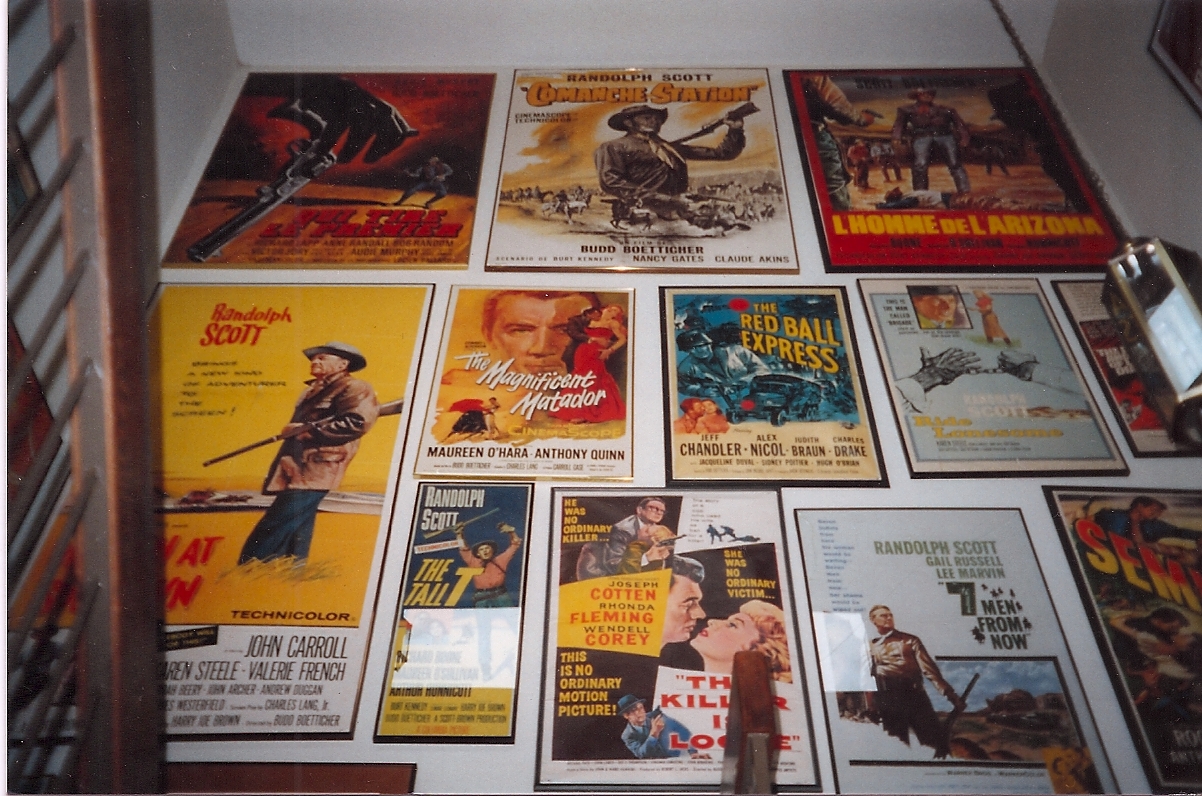
To this day most biographies of Budd are split down the middle like an axe cleaving a log in two.  There are the prolific early years as a studio director turning out tough, taut action movies, capped by the glorious cycle of Randolph Scott-starring westerns in the mid-1950’s – including 7 Men From Now, The Tall T and Ride Lonesome.  One of -- if not the single greatest -- director/actor collaborations in American film.

Then the later years, after he returned from his strange, inexplicable odyssey to Mexico, when he managed to make only one more feature, the melancholy Audie Murphy-starring A Time For Dying.

Sitting right in the middle of his life’s story, like one of those weird, phantasmagorical creatures they used to draw on medieval maps to indicate unknown territory:  the infamous documentary Arruza

It occupies roughly the same position in Budd’s life as the white whale did in Ahab’s.  There’s a before Arruza, and an after Arruza.

[Right:  Budd and his wife, Mary Boetticher.]

The movie itself is almost incidental to the story surrounding it:  how Budd drove down to Mexico in the early 1960’s to start filming it in a white Rolls Royce with his then-wife, the starlet Debra Paget, and her mother … How Paget and her mama returned a few months later, leaving Budd to stay, and stay, and stay.  Intent on finishing a documentary that had come to define his life much more than the man it was supposedly about … How he remained in Mexico, through divorce, bankruptcy, short periods in prison and a mental hospital … even through the tragic death (in an unrelated car accident) of his best friend and star, Carlos Arruza.

The story itself, and Budd’s many re-tellings of it, came to take on the fabric of a modern-day medieval romance, with Budd on a never-ending quest, like Orlando Furioso, in search of an unattainable goal.

When he finally emerged from the wilderness in the late 1960’s, film in hand – the world had changed around him.  The New Hollywood era of Bonnie & Clyde and Easy Rider was just kicking off, no one remembered him or his earlier films. 

He’d returned, finally, to silence and indifference.

This then, sitting in a plain brown box with a U.P.S. sticker on it, was the script that started it all.

It's dated June 5, 1959 -- which means it comes before the long, long years in exile in Mexico (although he'd obviously already spent a lot of time thinking about the project and shooting footage -- the script references film he'd already shot of numerous bullfights in the mid-1950's with Arruza.)

I read the script -- and it left me with very strong and very mixed feelings.  Knowing everything that was to come after -- his divorce from Paget, the virtual end of his Hollywood career and all his contacts in the industry, Arruza's accidental death -- it's hard not to see it as a blueprint for madness.  


I'd been reading a bunch of classic 1950's-era Donald Duck comics written by Carl Barks to my son recently.  Many of them revolve around the discovery of a lost map.  A journey into the jungle in search of fabulous Mayan treasure.  The kind of adventure story Hollywood loved to make back then starring Stewart Granger or Victor Mature.  Budd's vision of Arruza's life is definitely an adventure story of a kind -- and an unabashed love letter to the man himself.  

Like Randolph Scott and Richard Boone in The Tall T, this was a love affair, even if a platonic one.


It's reading a lot -- probably too much -- into it, but Budd's Arruza script seems like a map with no treasure at the end.  A journey with no real destination.


Like the finished film, the script is a strange beast, neither fish nor fowl.  It's a staged documentary recreating Arruza's retirement from bullfighting and his decision -- prompted by crushing boredom and ennui -- to return as a rejoneador fighting on horseback. 


 The "documentary" is so highly scripted by Budd though, that it's practically fiction.  It's probably closest in spirit to the staged Disney live-action films of the 1950's about lovable gophers out in the desert etc. -- except in this case it's men drinking tequila and killing bulls.  So it's hard to know who the target audience would've been for this, probably another fatal flaw.

The thought suddenly hit me that the Arruza story would've been successful if Budd had just fictionalized the whole thing like his earlier films The Magnificent Matador and The Bullfighter & The Lady, and hired someone -- Tony Quinn, Ricardo Montalban, George Chakiris -- to play Arruza.  He'd done it before and those movies did okay, Hollywood knew what to do with that kind of story.

But of course he couldn't do it here.  He had to present his idealized, mythologized "love letter" to Arruza, bulls and horses in his own strange, half-real way.

It's over 50 years now since Budd started on that journey -- the film Arruza came out in a bastardized version edited by John Sturges, sank like a stone -- and he never really finished it.  Never really stopped hoping he'd re-emerge from the wilderness to find a hero's welcome, wealth, a loving family, the adoring cheers of the crowd.  All the things that the idealized Aruzza in Budd's script revels in.  All the things Budd lost or threw away.


Sunday, January 2, 2011

Robert Evans - The Lost Screening Room

In July, 2003 Daily Variety ran an article by Army Archerd on a disastrous fire that broke out at producer Robert Evans’ Beverly Hills estate, destroying his screening room and trophy room.  The piece didn’t go into specific details about what was lost in the fire other than saying that prints of his classic films were destroyed along with “all his trophies and awards.”
  
I might not have noticed the piece, except for the fact that I’d spent an afternoon in the now-vanished screening room with Evans a few months earlier.  We’d met to discuss an upcoming tribute to him at the American Cinematheque’s Egyptian Theatre in Hollywood, screening films he’d produced or overseen as a studio exec including Chinatown, The Godfather, Harold & Maude, Love Story and Rosemary’s Baby.  Evans was riding an all-time high, image-wise, with the success of The Kid Stays In The Picture on film, book and audio-recording.  “A lot of guys have more money than me, but fuck ‘em,” as he said at the end of the meeting.  He’d neatly tapped into the public’s fascination with both unbridled, Rat Pack-style masculinity and nostalgia for the New Hollywood of the early 1970’s.  Love him or hate him, he’d become the Last of the Red Hot Moguls:  Dean Martin playing Irving Thalberg.

Evans’ house had acquired near-legendary status because it’s featured so prominently in The Kid Stays In The Picture – he makes a big deal in the book of getting his home back after he’d sold it, it’s his own personal Tara.  The house sits behind a high wall of greenery, and you enter through a small security gate, winding down a short tunnel of overhanging trees until the mansion appears on the left and you reach a circular front driveway.  I’d arrived a few minutes early for the meeting, where I’d be joined by John Hersker, the extremely affable V.P. of Distribution for Paramount who’d helped set up the tribute.  One of Evans’ small team of assistants, a dark-haired woman named Vanessa in her late 20’s, showed me to the back screening room.  While I waited for Evans to finish a lengthy phone interview I had time to check out the room which was decorated with:

A miniature cannon
Round wood table with flowers and low leather chairs
Two pairs of reading glasses on the table; a phone on the green carpet floor
A Picasso and Negulesco on the wall:  bullring and female nudes
Full bar, with a large pitcher of melted ice
A remarkable B&W photo on the wall:  a huge blow-up of a fat female hand with $500 bills, wearing a pear-sharped diamond ring and the title:  “Monte Carlo, 1982.”
Three small embroidered pillows:  “R.E. – Rejection Leads to Obsession, N.J.”; “He Knows Where You’re Sleeping”; and “I’m In A Meeting! Darling, I Can’t Speak To You Now!  I’m In A Meeting!”
Rear doors opening onto the tennis court
A Paul Klee (?) or Miro of fish on a plate
A large French poster by Lautrec
Circular pool visible outside with arcing water jets
Metal cannisters placed about with loose cigarettes and matches

After about ten minutes Hersker arrived and we sat around talking about the house, Evans’ career, bad movies about Hollywood including The Oscar, Myra Breckinridge and Evans’ own The Last Of Sheila -- and The Kid Stays In The Picture’s chances of getting an Oscar nomination (“not too good,” according to Evans himself later.)

Evans finally appeared, apologizing for being a half-hour late.  The first thing I noticed was how firm his handshake is; the second, his bronzed pot-belly poking out from his shirt when he sat like a little Buddha.  His face is the ruinous wreck of a good-looking man; he talks with the same raspy, bedroom whisper that’s become famous from Kid, and everything he says sounds like it’s been scripted by some very funny writers.

He immediately launched into a passionate discussion of how the studio’s marketing department had fucked up the trailer for his upcoming romantic comedy How To Lose A Guy In 10 Days.  “They’re selling it for chicks.  No guy is going to want to go see the film.  He’d rather stay home and watch basketball re-runs.  The poster’s not bad – except they’ve screwed up the whole point of the title.  They’ve got HOW TO LOSE A GUY in big type, and below it, in 10 Days, in small type like it’s not even part of the film.  The whole joke is ‘howtoloseaguyin10days,” they just don’t fucking get it,” he sighed.  He paused, reflecting a bit sadly on how things had changed:  “In the old days I would’ve walked in there yelling and screaming till they fixed it … but I did that on Sliver and got kicked out.”  He apologized for taking us off on a tangent, then called another assistant in to show us a video reel cut by some MTV guys that would demonstrate how Evans thought the movie’s trailer should be cut.  The assistant appeared, gave Evans a British paper with a glowing review of The Kid Stays In The Picture’s release in the U.K., then disappeared.  “Where’d the guy go??  Where’s the trailer?” Evans growled a minute later, pushing buttons on his antiquated speaker phone until the assistant came back.  “Robert Evans:  Hollywood Legend” ran about four minutes and featured speeded-up clips of Evans’ early acting role in The Sun Also Rises intercut with scenes from Chinatown, Harold & Maude etc. – all set to a rap beat.  “This is how the trailer should look,” he said, jabbing his finger at the screen, “this is what kids pay attention to.”

We finally got around to talking about details for the tribute, which Evans seemed genuinely touched and appreciative for.  He was in fact swimming in tributes, awards and accolades at the moment and couldn’t have been happier.  He pulled out a binder filled with letters of invitation from the Producers Guild to receive their David O. Selznick Lifetime Achievement Award, from Larry King to appear at his Cardiac Foundation Fundraiser, even an unsolicited note from Alec Baldwin saying how much he loved Kid – “I never met the guy before, he just sent this to me,” Evans noted – adding in the letter:  “I was married to a fragile, unbelievably beautiful actress myself, and know what it feels like to see our fairytale marriage blow away like sand,” or something to that effect. 

Like any good producer, Evans expressed concern for getting a big audience for the film tribute:  “Maybe you should mention it’s a tribute to the recipient of the David O. Selznick Award from the Producers Guild, that sounds impressive,” he suggested, then grabbed the phone and dialed his publicist.  “I never had P.R. guy before, never needed one – but I’ve got to have somebody to say ‘no’ these days,” he added.  His publicist sounds like a character actor playing a hammy impersonation of a P.R. rep from a 1950’s film, he says things like “this won’t just be a home-run, it’ll be a MEGA home-run.”  Evans launched into another tangent, ranting on the phone about the placement of his tribute ad to Sumner Redstone in a recent issue of the trades:  “I’m the only one from the studio who took out an ad, can you fucking believe that?  And look where they put it, in the back of the paper, across from some guy I never heard of.  It looks like I’m paying tribute to this asshole, not Redstone.  The sonofabitches woke me up at 3 AM in London about this ad, made me send a check right away.  An apology won’t do, I want my money back!” he howled.  His publicist promised to get right on it, and Evans hung up.  He punched another button for his assistant Vanessa:  “Ask Emmanuelle to come back here, there’s some people I want here to meet,” he said, then stood and walked into the back bathroom. 

“C’mere, there’s something I want to show you,” he said from around the corner.  Hersker and I sat there, confused.  “Hey, I said come here, you’ve gotta see this,” he ordered.  We duly followed him into the bathroom, where he proudly pointed out two certificates hanging over the toilet from the National Film Registry of the Library of Congress:  “I’m the only producer alive with two films on the National Registry.  You should put that in the press release, it sounds impressive.  This one says, ‘To Robert Evans, producer of Chinatown.’  And this one, ‘To Robert Evans, creator of The Godfather.’”  He stressed “creator” twice, like he was particularly pleased by it.  Hersker noticed a framed note from Bernie Myerson of Loews Theaters on the wall and mentioned that Myerson had just recently passed away.  “He did?  Aw Christ, I’m really sorry to hear that.  I would’ve come to the funeral if I’d known but I was in London … Bernie cost me $6 million once, I called him The Six Million Dollar Man.  Somebody wanted to buy me out of my percentage on Black Sunday.  Bernie told me not to sell.”  The note from Myerson was, in fact, glowing praise about Black Sunday and ended with the prediction “It’ll be bigger than Jaws!!”  “It wasn’t bigger than MY jaw,” Evans chuckled. 

His assistant Vanessa’s voice interrupted from the other room – “what do you want?” he shot back, until she reminded him that he’d asked for Emmanuelle to come back.  “Emmanuelle” is Emmanuelle Seigner, wife of Roman Polanski and star of Bitter Moon and Frantic.  She was standing in the outer screening room, patiently waiting for us to emerge from the bathroom.  Evans introduced us, we shook hands politely and then Evans put a fatherly hand on her shoulder.  “What are you doing tonight?” he asked.  Seigner, bottle blonde and a little shy, replied that she was going out to dinner with Evans’ son, Josh.  Evans nodded, then added after she left, “Roman likes her to stay here when she’s in town, he knows she won’t get into trouble.”

As the meeting wrapped up Evans led us around the circular pool with arcing water jets – but instead of taking us into the main room, he led us into his bedroom.  It seemed a bit odd, like he wasn’t entirely sure which way to go – I had to remind myself that he’d suffered a devastating stroke in 1998.  Even Hersker, an old studio friend, cautioned him to slow down his non-stop schedule of travel and personal appearances.  “Yeah, I want to be around for the tribute, right?” Evans joked.  He led us back into the main room of the house where Hersker pointed out a beautiful architectural detail:  through an ingenious trick of design, the fireplace is vented off to each side so the architects could place a pane of glass right above it which looks out across the circular pool to the back screening room, which was has its own brightly roaring fireplace.  “It’s an optical illusion, the two fires,” Hersker said – a casual comment that took on a sadder meaning a few months later when fire gutted the screening room.  “Yeah, but you’re not seeing the illusion right,” Evans countered, as he struggled to light the fire in the main room.  After fiddling unsuccessfully with the gas he called for Vanessa, who didn’t know how to get it lit either.  “Once you get started with something you’ve got to finish it,” Evans said as he wandered off looking for long matches.  He finally succeeded in getting the fire blazing in the living room, and we stood there for a long moment admiring the illusion, and the very real but somehow artificial-looking moon hanging perfectly over the circular pool outside.  Evans asked his assistant to get him a drink, and as she left he sighed “I feel like a gynecologist in a whorehouse I’m so busy these days.”  Hersker assured him that How To Lose A Guy In 10 Days would be a big hit (which in fact it turned out to be.)  “Yeah, I just don’t want to get hit in the balls,” Evans grinned as we walked out.

As I walked back to my car I saw Seigner and Evans’ son briefly pulling out in a sports car headed to dinner, and for an instant thought that Evans would be left alone in his sprawling mansion.  Then I remembered that he’d just been married a few weeks earlier – “my sixth, her first”, Evans noted – and his new wife was somewhere in the house; Hersker said he’d greeted her briefly when he arrived earlier, wearing a bathrobe.  It was dark in Beverly Hills when I wound back through the tunnel driveway and headed towards Sunset Blvd.  The thing that stuck most in my mind was one of Evans’ many tangents during the meeting:  “You want to see the arc of my life?,” he asked unexpectedly.  He turned and pointed to two plaques hanging on the wall in his trophy room.  On the bottom was an award for Most Promising Newcomer of 1958 from Photoplay magazine – and above, a certificate for Evans’ star on the Hollywood Walk of Fame in 2002.  “That’s me,” he said, then shook his head.  “1958.  Christ, that’s a long time.”